




For manufacturers & sellers
Test seal and test report for your product
Physical product test, editorial report, public licence number. Proof that stands up to every question.
The starting point
Trust in online retail: the core problem
On marketplaces, the decision which offer gets opened is made in seconds. Careful production gives you no advantage at that moment, because quality does not show in the listing. Five hurdles every manufacturer knows.
Same images, same bullet points, same stars. The buyer scrolls past — not because your product is worse, but because nothing tells them why they should stop.
Everyone knows that reviews can be bought. A signal anyone can produce proves nothing. What remains is a buyer who orders on trial — and sends it back.
Visibility is rented, not earned. As soon as the budget stops, the listing falls back to where it was before. Growth becomes more expensive instead of more profitable.
Search for your own product on Google. What you find are your own listings — no independent source that a buyer, a retailer or an AI assistant could rely on.
“Test winner”, “best quality”, “tested” — without proof, such claims can be challenged as misleading. The very arguments that would sell are the ones you are not allowed to use.
Burden of proof
How to recognise a reliable test seal
A seal is not a design element but proof of quality. Whether it holds up when it matters comes down to three points — verifiable on any offer, ours included.
- 01 The test is publicly accessible Every seal comes with a test report anyone can read. Without that reference, advertising with the seal is open to challenge — however good the product actually is.
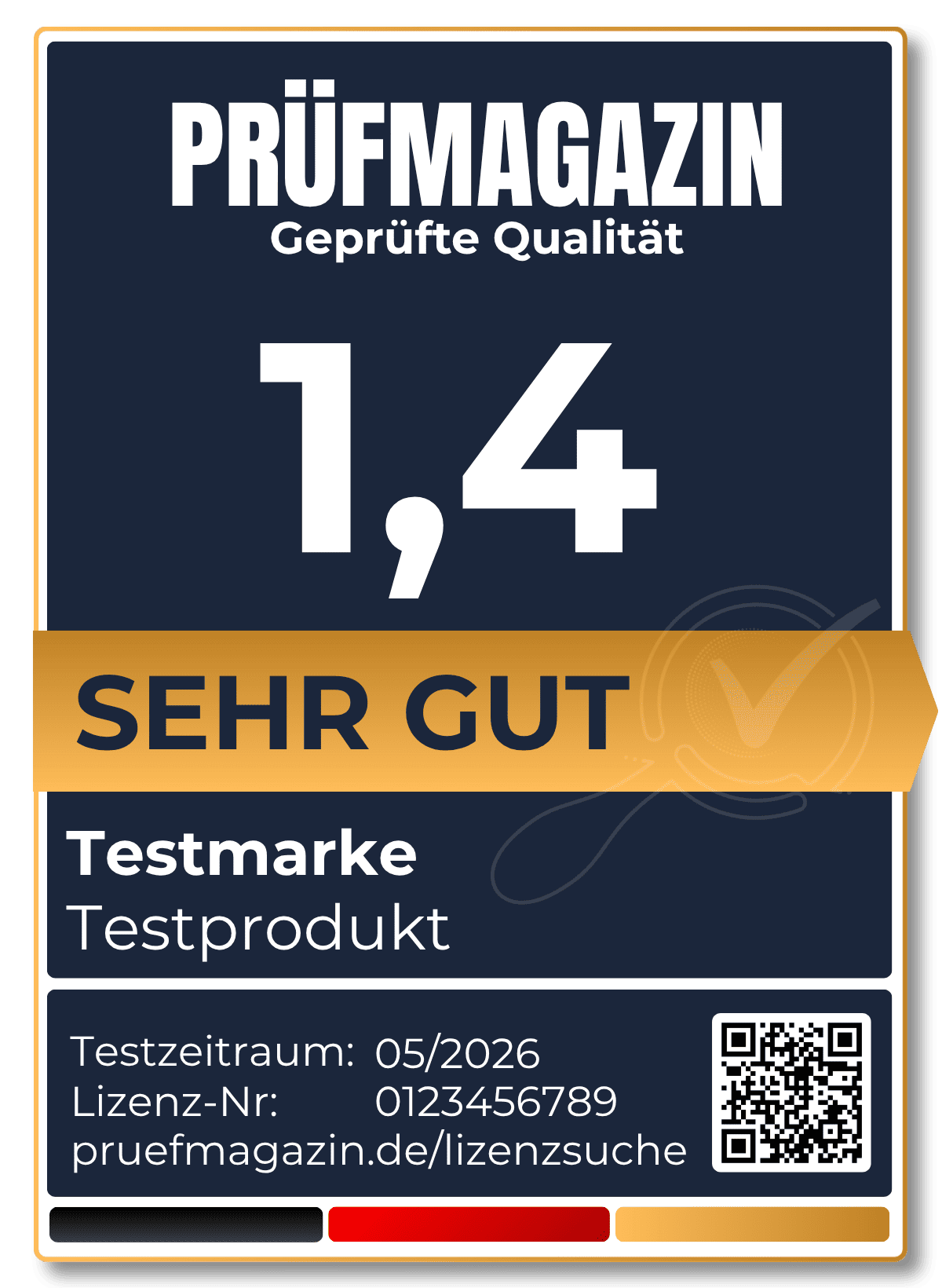
- 02 The seal can be clearly attributed Grade, test period and licence number appear on the seal itself. That settles directly which product was tested and when.
- 03 The benchmark was set in advance Test parameters and weighting are published before testing begins. A benchmark created after the result is no benchmark.
For advertising with a test seal, Germany’s Federal Court of Justice requires a clearly visible, easily accessible reference that can be attributed to one specific test. The obligation applies regardless of how prominently the result is featured.
BGH, judgment of 15.04.2021 — I ZR 134/20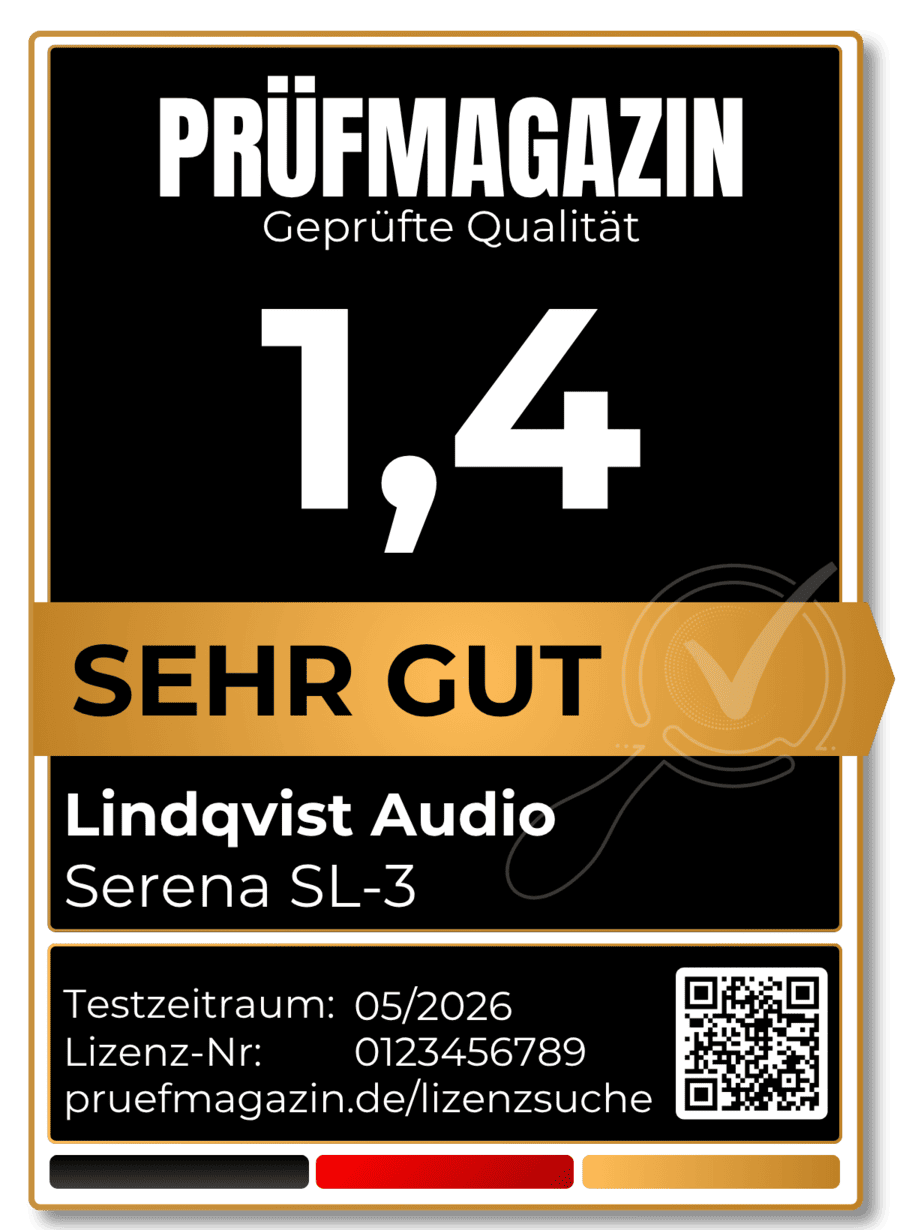 01
02
03
04
Scope of service
What a product certification includes
The test report is the service. Everything else makes it usable.
Test report
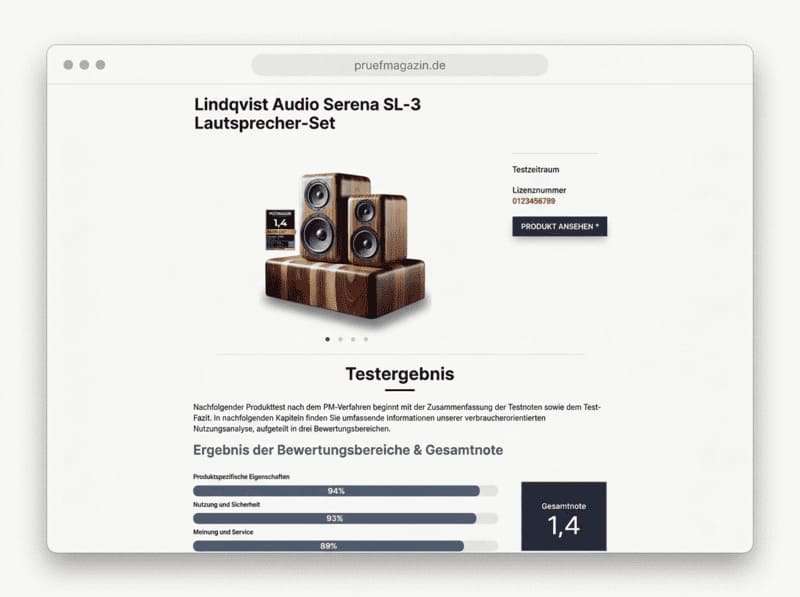
Editorial article in the magazine, publicly accessible.
Evaluation report
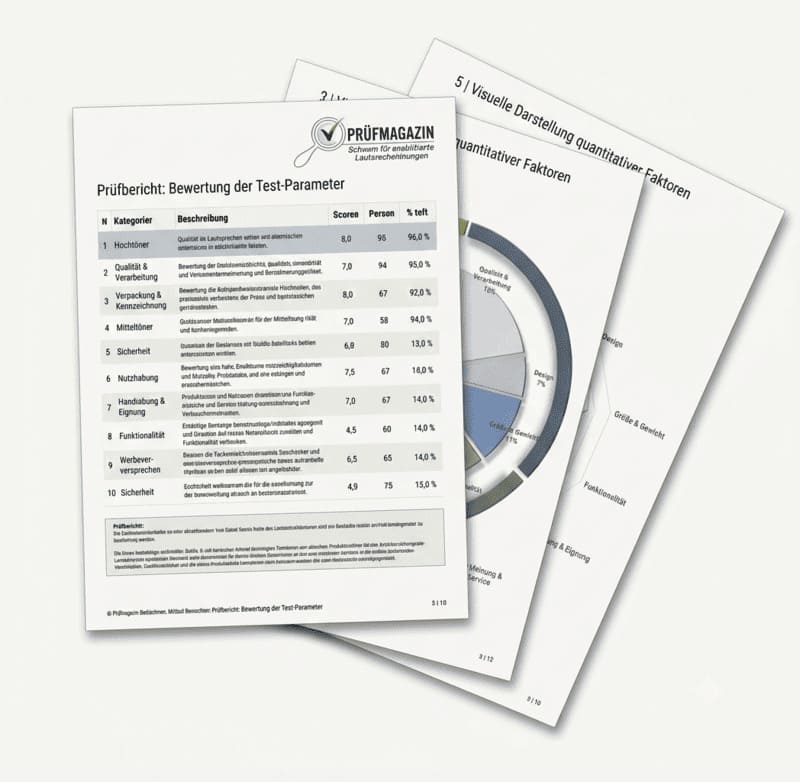
All test results as a document, for listing talks with retailers.

Test seal
With licence number, for your listing and marketing materials.
International test seal
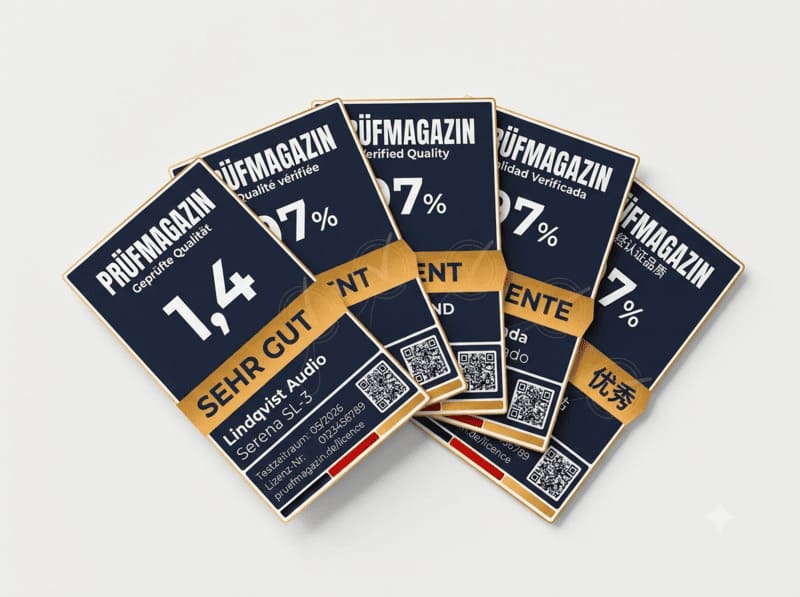
The seal in eleven languages, for use abroad.
The scope of testing is the same for every product. The only differences lie in the versions you need from it — international language versions, for example.
Have a product testedBuying decision
Where a test report
meets the buying decision
Research rarely starts in the shop. Four points at which a published test report becomes visible.
AI systems repeat what they can back up. A published test report is an external source on your product — your own listing is not.
The test report ranks on its own under your product name. That is reach you do not pay for per click, and it does not end when the budget ends.
In a grid of similar offers — on Amazon as on any marketplace listing — the seal is the only element that shows an outside assessment. It answers the question of what makes the difference before it is asked.
The licence number leads to the full report. Buyers who can read up before buying order on trial less often — and send back less often.
pruefmagazin.de › test reports
Test report: travel stroller in a hands-on test — overall grade 1.9
shop.example › product
Buy a travel stroller
forum.example › thread
Looking for experiences
Licence number
2607000883
To the full test report
Amazon’s Choice and Best Seller badges are awarded by the marketplace on its own terms — and can be withdrawn at any time. A test seal with its own licence number stays yours, wherever you sell.
Case study
30 days after certification
A product from the hair care & styling category, sold on Amazon Germany. Same images, same copy, same price, same advertising budget — a single signal was changed.
Units sold per month
Advertising cost per unit sold
Starting point
The offer was well managed and backed by advertising. Without an external quality signal, visibility depended entirely on paid traffic: listing on page 4 of the search results, 47 units sold per month.
Measure
January 2026: certification according to the PM procedure. Seal added to the listing, test report published and indexed. Product, price and ad budget remained unchanged.
Result
- Listing position: page 4 → page 1
- Best Sellers Rank hair clippers 356 → 96
- Best Sellers Rank beauty 37,072 → 20,822
- Return rate 14% → 12.5%
- Testing costs recovered after 14 days
Process
Having a product tested —
how it works
Your part: one form
and one test sample.
Suitability
Which products we test —
and where the limits are
We test what can be assessed transparently in everyday use — practically every physical consumer good. Fifteen categories, two exceptions.
Licence guidelines
How the seal is used
The rules protect the value of the seal — for you and for every other licensee. A seal that can be altered at will loses its meaning.
Permitted
Unaltered display Shape, colour and content as supplied, scaled proportionally.
Not permitted
Colours altered Recoloured or desaturated, the seal is no longer unambiguous.
Not permitted
Aspect ratio distorted Squashed or stretched seals count as altered.
The licence is valid for twelve months and can be renewed as long as the product remains unchanged. No new test is required for renewal. The time limit ensures that no seal is advertised with an outdated test status.
The seal is used unaltered in shape, colour and content. Scaling is permitted as long as the aspect ratio is kept — licence number and web address must remain legible. Together they form the reference that Germany’s Federal Court of Justice requires for advertising with seals. Not permitted are colour changes, distortion, cropping or removing these details.
The seal applies to the tested product. Variants may use it as long as material, contents and product properties are identical — that is, the differences concern only colour or size. If formulation, accessories or contents change, a new test is required.
During the term, the seal can be used on product images, in A+ content, in marketplace listings, in your own online shop, on packaging, flyers and in marketing materials. No separate approval is needed for individual channels — all that matters is that the display meets the requirements.
Compliance with the terms of use is the licensee’s responsibility. For questions about specific uses — special editions or bundles, for example — we clarify the individual case in advance so that use stays on safe legal ground.
-
An independent specialist editorial team. We certify according to our own PM standard — a private certification based on published test criteria, not an official inspection and not a comparative product test.
-
A paid service. The fee pays for the testing work, not for the result. Ratings are based solely on the evaluation handbook.
-
A disclosed benchmark. Test parameters, weighting and scoring key are fixed before every test and open for anyone to see.
Pre-qualification
Is your product suitable?
Not every product can be meaningfully assessed with the PM procedure.
- Expert assessment, no obligation
- Your details are treated confidentially
- Non-binding quote if suitable
Questions first
Contact usIf you would like to clarify something first or submit several products at once.
Helpful answers
Frequently asked questions about the test seal
What manufacturers and sellers most often want to know before a test.
Question not listed? Contact usEvery test ends with a published test report, not a logo. Anyone who just buys a seal gets a graphic — with no reference and no visibility outside their own listing. With us, your product appears as an editorial article on a portal with 90,000 readers a month, indexed and citable as a source — right into the answers of AI assistants. On top of that comes the evaluation report, a document you can present in listing talks with retailers.
Twelve working days from receipt of the test sample — from the incoming inspection and the test through to publication of the report. Product types that need additional analyses can take longer; we point this out in advance.
One unit is enough, together with technical documentation and the user manual. For product variants that differ only in colour or size, one test sample is also sufficient.
Twelve months, renewable as long as the product remains unchanged. No new test is required for renewal. If formulation, contents or material change, a new test is needed.
Yes. Every test report can be accessed free of charge via the licence number — by your customers, trading partners and marketplaces. That is exactly what turns the seal into a verifiable statement and meets the reference requirement for advertising with seals.
No. Ratings follow the published evaluation handbook, which is open to view before every test. Test parameters and weighting are fixed in advance; the fee pays for the testing work, not the result.
The effort varies with the type of product and the number of test samples. That is why we do not quote a flat rate, but first clarify whether and how your product can be tested. You receive the quote together with the pre-qualification feedback, within 24 hours.
Yes. The seal is approved for marketplace listings as long as the licence number and web address remain legible — they are the reference to the test report. Product images and A+ content are permitted; under the marketplace’s image rules, the main image remains reserved for the product alone.